Facebook in 2026 pays creators for Reels, longer videos, Stories, photos and text posts through one program, Content Monetization — and paid out nearly $3 billion in 2025. Growing there means posting original content in a clear niche, favouring Reels, writing captions that match the post, and avoiding the spam tactics Facebook now demotes. This guide covers setup, growth, privacy and money, with links to our deeper articles.
Facebook is often dismissed as "the old network", yet it still pays creators more than most platforms and reaches audiences other apps don't. The rules changed a lot in the last two years: monetization programs merged, spammy tactics lost reach, and users got new tools to steer their own feeds. Here's how it all fits together.
1. Page or profile?
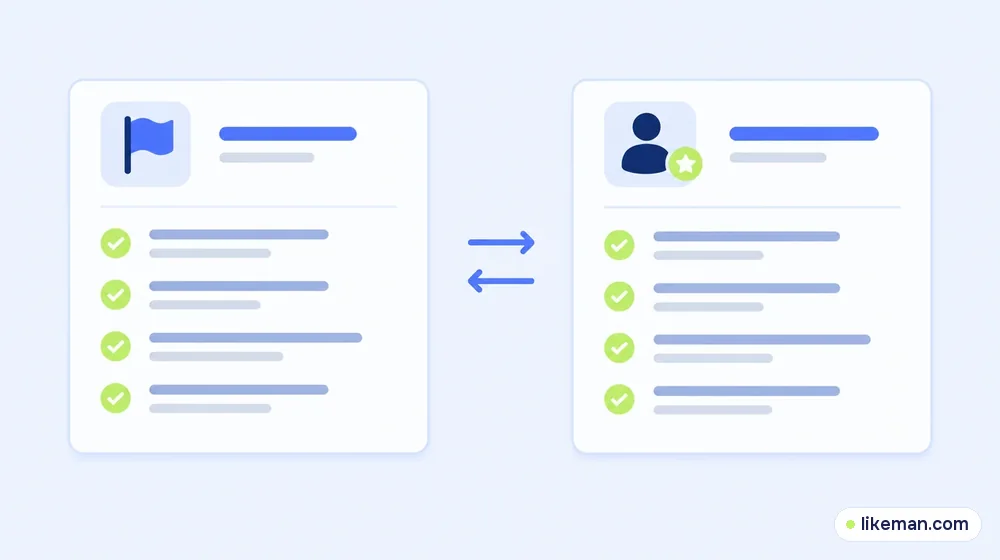
| Facebook Page | Profile in professional mode | |
|---|---|---|
| Best for | Brands, businesses, teams | Individual creators who already use a personal profile |
| Audience | Followers and likes of the Page | Followers plus your existing friends |
| Tools | Meta Business Suite, ads, roles for staff | Professional dashboard, monetization tools |
| Separate from personal life | Yes | Partly — it's still your profile |
If you're a business or plan to hire help, start with a Page. If you're a person whose friends already follow your life, professional mode on your profile is often the faster start. Queued for this cluster: switching on the digital creator label (and removing it), and finding your follower list on a profile or Page.
2. Getting followers
The basics haven't changed: a clear promise in the intro, a recognisable profile photo, a cover image that tells people what to expect, and a steady posting rhythm. Our 14-tactic follower guide for Facebook walks through every step, starting with the profile and ending with partnerships.
What's different in 2026 is that Facebook explicitly rewards original creators. When Meta announced Creator Fast Track in March 2026, it said future payouts would put even greater emphasis on rewarding original content.<!-- checked: 2026-10-16, https://about.fb.com/news/2026/03/creator-fast-track-grow-your-audience-earn-money-on-facebook/ --> Reposting other people's viral clips is now a weaker strategy than ever.
Coming next: how to increase likes on posts and Pages, how to share a post or your profile, and how to see posts you've liked in your activity log.
3. What Facebook now treats as spam
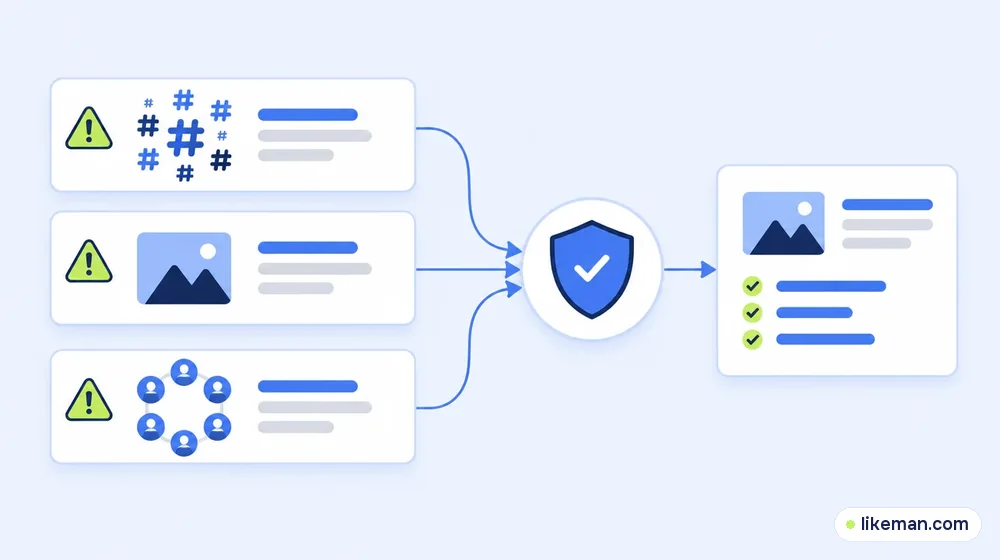
In April 2025 Meta announced a crackdown on spammy content. The specific behaviours it named:<!-- checked: 2026-10-16, https://about.fb.com/news/2025/04/cracking-down-spammy-content-facebook/ -->
- Long, distracting captions stuffed with hashtags.
- Captions unrelated to the content — Meta's example is a dog photo with a caption about airplane facts.
- Networks of accounts sharing the same content.
- Coordinated fake engagement — such comments will be shown less.
Accounts using the first two tactics have their content shown only to followers and lose monetization eligibility; spam networks lose monetization and may see lower reach. Meta also said it removed more than 100 million fake Pages engaged in scripted follows abuse in 2024, and over 23 million profiles impersonating large creators.
The practical takeaway: write captions that describe the post, use a handful of relevant hashtags at most, and never take part in comment or follow schemes.
4. Reels, videos, Stories and posts
Facebook pays across formats, but Reels lead. In 2025, 60% of creator payouts went to Reels, with the rest going to Stories, photos and text posts. That means a creator who writes well or takes good photos can still earn — not only video makers.
- Reels — vertical videos with a strong first second; the main way new people discover you.
- Longer videos — tutorials, stories and episodes for viewers who already know you.
- Stories — daily updates and behind-the-scenes for followers.
- Photos and text — opinions, questions, community posts.
Coming next: whether you can see who watched your Reels or your Story and for how long, how to pin a post on a Page, group or profile, and how to turn off or hide comments and reactions.
5. How the feed decides what people see
Facebook ranks posts using signals from what people like, comment on and watch. In October 2026 Meta added Your algorithm, a space in the three-dot menu where users add and manage the topics they want in Feed and Reels, and can tell Facebook in their own words what they want more or less of; recommendations update right away.<!-- checked: 2026-10-16, https://about.fb.com/news/2026/10/introducing-your-algorithm-facebook/ -->
For creators, this makes clear topics even more important. If people can literally ask for "more woodworking tutorials", the accounts that are obviously about woodworking are the ones that benefit.
6. Getting paid: Content Monetization
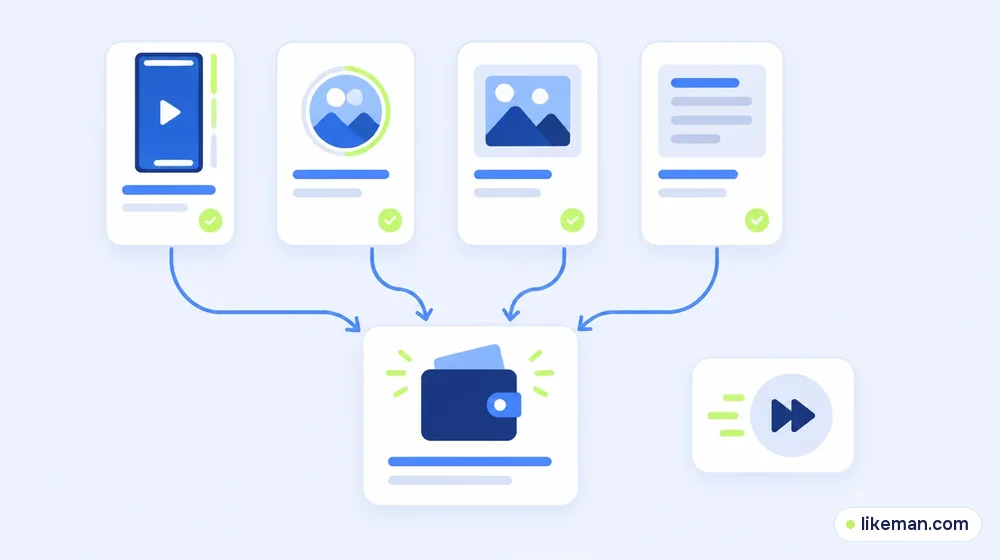
In October 2024 Facebook folded its three Facebook-funded payout schemes (in-stream video ads, Reels ads and the performance bonus) into one program, Facebook Content Monetization, which pays for Reels, longer videos, photos and text posts. The payout model stayed performance-based: earnings depend on how eligible content performs. Invited creators join from the monetization tab of the Professional dashboard on mobile or Meta Business Suite on desktop.<!-- checked: 2026-10-16, https://about.fb.com/news/2024/10/monetize-content-facebooks-new-streamlined-program/ -->
Scale: Meta says it paid creators nearly $3 billion in 2025, up 35% from the year before, and that the number of creators earning more than $10,000 a year on Facebook grew by over 30%.
Our explainer on whether Facebook pays for views is coming soon with worked examples.
7. Creator Fast Track
Creator Fast Track, launched in March 2026, is aimed at established creators who are new to Facebook. Participants get extra reach on eligible Reels and three months of guaranteed pay for sharing eligible Reels. The amount depends on the audience you bring: $1,000 monthly for creators whose following on YouTube, TikTok or Instagram reaches six figures, and $3,000 monthly once a single one of those accounts passes a million. They also get immediate access to Content Monetization.
If you already have an audience elsewhere, this is the fastest legitimate way to start earning on Facebook. If you don't, focus on Content Monetization eligibility instead.
8. Groups: the community layer
Groups are where Facebook still feels like a neighbourhood. For creators and businesses, a group turns passive followers into a community that talks to each other, not only to you.
- Start a group around a problem, not a brand. "Home bakers fixing sourdough fails" attracts more members than "Ana's Bakery Group".
- Write three clear rules and pin them.
- Seed conversations with weekly threads: questions, wins, photo days.
- Promote members' posts, not only your own.
- Link the group to your Page so Page visitors find the community.
A small active group is worth more than a big silent one: members see your posts more often because they interact with them.
9. Live video
Facebook Live works well for Q&As, tutorials, product launches and behind-the-scenes. Announce the time a day ahead, start with a quick intro of what viewers will get, greet people by name, and keep the replay up — many people watch later. A regular slot, such as every Tuesday evening, builds a habit faster than occasional streams.
10. Reading your numbers
The Professional dashboard shows how each post performs. Focus on a few metrics:
| Metric | What it tells you |
|---|---|
| Reach | How many people saw a post |
| Engagement | Reactions, comments and shares per post |
| Watch time and retention (videos) | Whether viewers stay to the end |
| Follower growth | Which posts turn viewers into followers |
| Earnings (if monetized) | Which formats pay best for you |
Check these numbers weekly, at the same time each week, so you compare like with like. A single post can spike for reasons you don't control — a share from a big Page, a news event — so look for patterns across several weeks before changing your plan. Compare formats, not single posts. If Reels consistently reach more people but photos earn more comments, use both on purpose: Reels to be found, photos and text to start conversations.
11. Boosting and ads
Boosting a post is the quickest way to put money behind content that already works. Choose a post with good organic reach, set a small daily budget and a specific audience, and measure cost per follower or per message rather than likes. For campaigns with several versions, use Ads Manager. Avoid boosting posts with long hashtag lists or vague captions — they look spammy in ads too.
12. Content ideas that work on Facebook
- Local knowledge. Facebook audiences skew local; guides to your city, region or community perform well.
- How-to Reels with a clear result in the first second.
- Opinion posts that invite respectful debate in the comments.
- Photo series — before and after, step by step, a project over time.
- Community spotlights — share and credit followers' work, with permission.
- Nostalgia and life stages — parenting, home, careers, hobbies people have had for years.
Mix two or three of these on a weekly rhythm so your followers know what to expect.
13. Protecting your account and name
Impersonation is a real risk for growing creators: Meta reported removing over 23 million profiles impersonating large content producers in 2024. Protect yourself:
- Turn on two-factor authentication for every admin account.
- Give team members their own roles instead of sharing a password.
- Report impersonators as soon as followers tell you about them.
- Tell your audience which accounts are official, for example in your intro and a pinned post.
- Never log in through links sent in messages promising "monetization approval" or "verification".
Collaborations and cross-posting
Two simple ways to reach new people without paying for ads:
- Collaborate with creators in neighbouring topics. Appear in each other's Reels or Lives, or share each other's best posts with a personal note. Audiences that already like a related topic are the most likely to follow you.
- Cross-post thoughtfully. If you publish Reels on Instagram, you can share them to Facebook too, but adapt captions to Facebook's more conversational, often local audience and answer comments on both platforms.
Keep collaborations honest: if money or products are involved, label the post as a paid partnership. Followers forgive sponsored posts; they don't forgive hidden ones, and undisclosed ads can also break local advertising rules.
14. Privacy and messaging basics
- View As shows how your profile looks to the public — useful before you switch to professional mode.
- Comments can be limited or turned off on posts, Reels and Pages.
- Reaction counts can be hidden on your posts.
- Messenger icons tell you whether a message was sent, delivered or seen.
Coming next: how to view your profile as public, Messenger sent vs delivered vs seen, and hiding likes on Facebook.
15. A 30-day plan
| Week | Focus | Measure |
|---|---|---|
| 1 | Set up a Page or professional mode; write a clear intro | Profile complete |
| 2 | 4 Reels and 3 photo or text posts on one topic | Reach per format |
| 3 | Reply to every comment; start one discussion post | Comments per post |
| 4 | Double the best format; drop the weakest | Followers gained |
16. Mistakes to avoid
- Reposting viral clips that aren't yours.
- Hashtag-stuffed or unrelated captions.
- Joining engagement groups or follow-for-follow schemes.
- Posting only links that send people off Facebook.
- Ignoring comments — Facebook is still a conversation network.
How it works at LikeMan
We provide growth services; we don't manage accounts. On our Facebook page you'll find followers, Page likes, group members, post likes, Reels views and video views. We work from public links and never ask for your login; checkout shows the total, delivery starts on its own and drops in the first 365 days are refilled. Keep in mind that Facebook pays for performance and demotes fake engagement, so delivered numbers are a first impression, not a monetization strategy — original content is.
FAQ
Does Facebook still pay creators in 2026?
Yes. Through Facebook Content Monetization, creators earn from Reels, longer videos, Stories, photos and text posts. Meta reports nearly $3 billion paid in 2025.
What is Creator Fast Track?
A program for established creators new to Facebook: three months of guaranteed pay ($1,000 or $3,000 a month depending on followers elsewhere) plus extra Reels reach and access to Content Monetization.
Do hashtags still help on Facebook?
A few relevant ones can. Long hashtag-stuffed captions are treated as spammy and can limit reach and monetization.
Page or profile for a creator?
Professional mode on a profile is the quickest start for individuals; Pages suit brands and teams.
How often should I post on Facebook?
A steady rhythm matters more than volume. Three to five posts a week, with at least two Reels, is a realistic target for most creators.
Are Facebook Groups worth it for creators?
Yes, if you can moderate them. An active group gives your most engaged followers a place to talk and keeps them close to your Page.
Can I repost viral videos to grow?
It's a weak strategy now. Facebook emphasises rewarding original creators and demotes spammy reposting.
Conclusion
Facebook rewards original creators who post consistently in a clear niche, write honest captions and favour Reels while still using photos, text and Stories. Content Monetization pays across all those formats, and Creator Fast Track helps creators who already have an audience elsewhere. Avoid the spam tactics Meta named, keep a 30-day rhythm, and follow the links in this guide for each next step.