YouTube creator earnings come from a 55% share of ad revenue on long videos and 45% of your slice of the Shorts pool, after the channel passes a thousand subscribers and a watch-time or Shorts goal. Other platforms pay differently: TikTok through Creator Rewards for qualified views, Facebook* through Content Monetization, Twitch through subs and Bits after Affiliate, Telegram by sharing half its channel ad revenue. Platform payouts are usually the smaller part of a creator's income.
"How much do creators make?" has no single answer, because every platform pays for something different: ad impressions, qualified views, subscriptions, gifts. This guide puts the official rules side by side, explains the formula behind each, shows where the real money usually comes from, and is honest about what growth services can and can't do. Every section links to our detailed platform guides.
1. The big picture: who pays for what
| Platform | Main program | What it pays for | Entry |
|---|---|---|---|
| YouTube | Partner Program | Ads on long videos and Shorts, memberships, Super Thanks | 1,000 subscribers + watch hours or Shorts views |
| TikTok | Creator Rewards | Qualified views on videos of 1 minute+ | Country-specific; e.g. Brazil: 18+, 10K followers, 100K views in 30 days |
| Instagram* | Gifts, Subscriptions, brand tools | Fan gifts on Reels, monthly fan subscriptions, partnerships | Varies by tool and country |
| Facebook* | Content Monetization | Reels, longer videos, Stories, photos, text | Invitation or eligibility in the Professional dashboard |
| Twitch | Affiliate / Partner | Subs, Bits, ads | Affiliate: 25 followers, 4 hours on 4 days, 3 average viewers |
| Telegram | Ad revenue sharing | Ads shown in channels and bots | Channel owners |
The rest of this guide explains each line.
2. YouTube
YouTube runs a two-step Partner Program. The lower step — 500 subscribers, a few recent uploads and a smaller watch-time or Shorts target — opens memberships, Super Thanks and Shopping. The upper step — 1,000 subscribers with 4K annual public watch hours or 10M Shorts views per quarter — opens ad revenue.<!-- checked: 2026-10-16, https://support.google.com/youtube/answer/72851 --> From 1 February 2027, new applicants for ads need double the watch time or Shorts views.<!-- checked: 2026-10-16, https://blog.youtube/news-and-events/youtube-partner-program-updates-2027-new-opportunities-earn/ -->
Revenue split: on long-form videos 55% of ad money goes to the creator; Shorts ads feed a shared pool, from which a creator receives 45% of the portion attributed to their channel.<!-- checked: 2026-10-16, https://support.google.com/youtube/answer/12504220 -->
A handy estimate: income ≈ (monetized views / 1,000) × RPM. RPM — revenue per mille — is what reaches you per thousand views once the platform has taken its cut. It varies hugely by niche and audience country. Real-world ranges are in our pieces on YouTube earnings per view and making money from Shorts; more worked examples (1,000 subscribers, 100K subscribers, 100K and 1 million views) and a YouTube money calculator are coming to the blog.
3. TikTok
On TikTok the main payout is Creator Rewards, which values qualified views and engagement on videos running a minute or longer. Each country has its own terms. In Brazil's version, applicants must be adults with a five-figure authentic following and six-figure authentic views over the previous month; estimates appear daily in dollars, money arrives on the 15th of the next month once the balance passes $50, and inflated, bought or incentivised metrics are thrown out.<!-- checked: 2026-10-16, https://www.tiktok.com/legal/page/global/tiktok-creator-rewards-program-br/en -->
Other TikTok income: LIVE gifts, TikTok Shop commissions and sponsorships. Typical rates are in our article on what TikTok pays per thousand views; an article on earning with few followers is next in line.
4. Instagram*
Instagram* has no flat per-view payment for most creators. What it offers instead:
- Reels gifts — viewers spend stars on virtual gifts for eligible Reels; the feature is live in dozens of countries, among them Brazil, the UK, Canada and the US.<!-- checked: 2026-10-16, https://help.instagram.com/523408036294825/ -->
- Subscriptions — monthly fan support for exclusive content.
- Partnerships with brands — Meta Creator Marketplace is one route; it's open to adult creators with public professional accounts and four-figure followings.<!-- checked: 2026-10-16, https://help.instagram.com/1389278101788752/ -->
Details: Instagram* and paid views and when an Instagram* following starts earning.
5. Facebook*
Since 2024 Facebook* runs a single program, Content Monetization, that rewards performance across Reels, long videos, images and written posts.<!-- checked: 2026-10-16, https://about.fb.com/news/2024/10/monetize-content-facebooks-new-streamlined-program/ -->
In 2025 Facebook* paid creators nearly $3 billion, and 60% of payouts went to Reels.<!-- checked: 2026-10-16, https://about.fb.com/news/2026/03/creator-fast-track-grow-your-audience-earn-money-on-facebook/ --> Creator Fast Track offers three months of guaranteed pay to established creators new to Facebook*, depending on their audience size elsewhere. Facebook* also removes monetization from accounts using spammy tactics such as unrelated or hashtag-stuffed captions.<!-- checked: 2026-10-16, https://about.fb.com/news/2025/04/cracking-down-spammy-content-facebook/ -->
6. Twitch
Twitch now lets every streamer switch on viewer support tools, yet you can only withdraw money as an Affiliate or Partner, and only once $50 has built up. Affiliate itself got easier in 2026: a few hours of streaming across four days, an average of three viewers on those days and a couple dozen followers.<!-- checked: 2026-10-16, https://blog.twitch.tv/en/2026/05/13/monetization-for-all/ --> Our article on Twitch streamer earnings from subs, Bits and ads is coming soon.
7. Telegram
Telegram shares 50% of revenue from ads displayed in channels and bots with their owners.<!-- checked: 2026-10-16, https://core.telegram.org/api/revenue --> Most channel income still comes from sponsored posts priced by average views, and from owners' own products.
8. Where creators actually make money
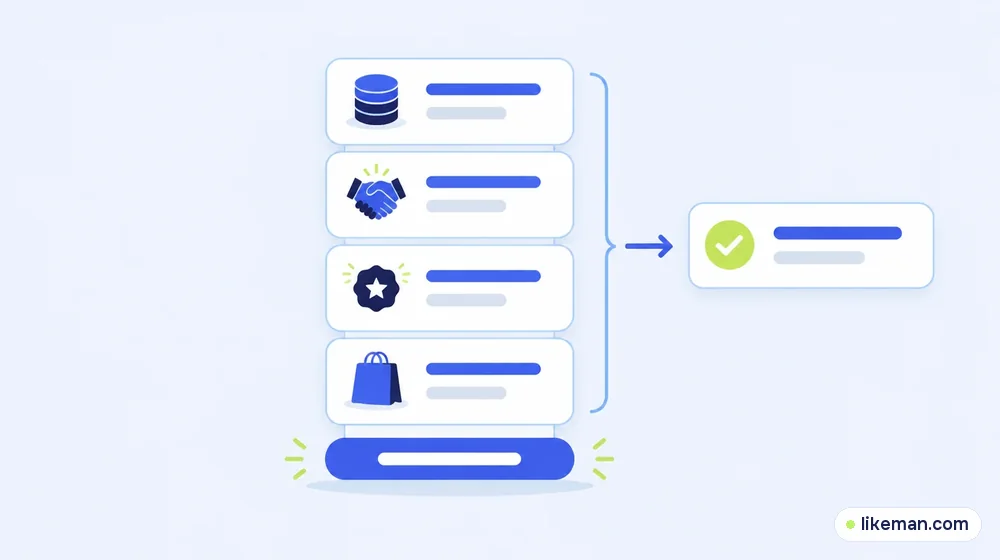
For most creators, platform payouts are the smallest layer. A typical income stack:
- Brand deals — paid integrations priced by reach and audience fit.
- Own products — courses, consulting, merch, digital downloads.
- Fan support — memberships, subscriptions, gifts, tips.
- Platform payouts — ad shares and creator funds.
- Affiliate income — commissions on products you recommend.
Brand-deal pricing is usually average views ÷ 1,000 × CPM. A channel with modest subscribers but strong views per post often out-earns a larger, quieter account.
9. Taxes and paperwork
Platform payouts are taxable income. Depending on your country you may need to register as self-employed or a business, keep records of income and expenses, and account for withholding or currency fees on international payments. Several programs (including TikTok's) withhold taxes where required by law. Talk to a local accountant before income becomes regular.
10. What growth services can and can't do
Growth services like LikeMan sell followers, likes and views. It's worth being precise about what that means for money:
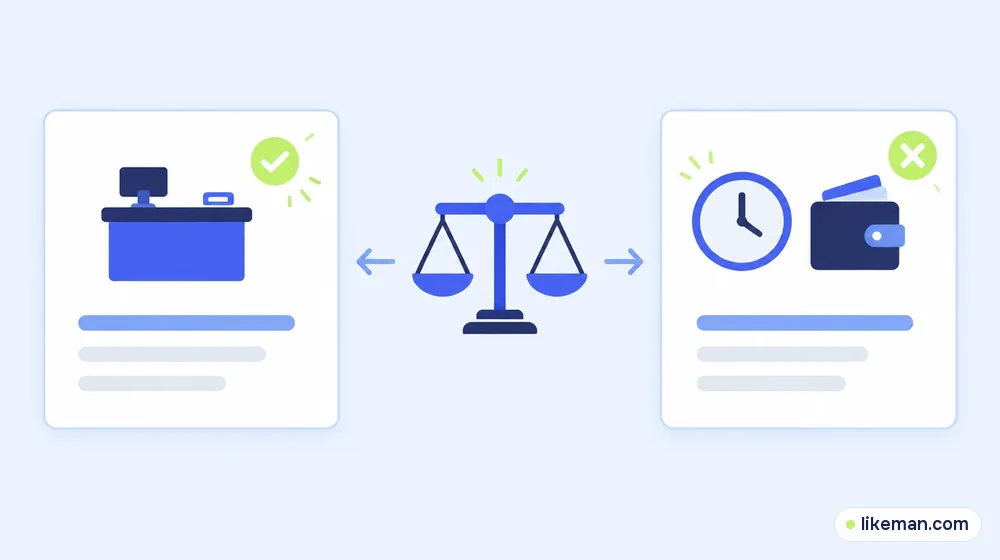
- They change the first impression. A new channel or profile with some activity looks less abandoned, which can help the first real visitors stay.
- They don't add qualified views or watch time. YouTube counts public watch hours from real viewing; TikTok's program terms explicitly exclude artificial or paid metrics; Facebook* demotes coordinated fake engagement.
- They don't buy brand deals. Brands look at views per post, engagement and audience data.
Our honest guides on whether buying followers is safe, how SMM panels work and how to spot fake followers explain the trade-offs in detail. Platform-specific checklists for Instagram*, TikTok, YouTube, Facebook* and X are on the way.
11. A realistic path to first income
| Stage | Focus | First money usually from |
|---|---|---|
| 0–1,000 followers | One niche, consistent posting | Small services, affiliate links |
| 1,000–10,000 | Formats that travel, collaborations | First brand deals, fan support |
| 10,000+ | Systems, team, products | Platform payouts plus products |
12. Choosing where to focus
If you're starting from zero, pick the platform where your format is native — long tutorials on YouTube, short entertainment on TikTok, visual niches on Instagram*, conversation on X, live interaction on Twitch, broadcast updates on Telegram — and use the others to redistribute your best pieces. Our platform hubs cover each in depth: Instagram*, TikTok, YouTube, Facebook*, X, Twitch and Telegram.
Worked example: one creator, three income sources
Imagine a cooking creator with a YouTube channel and an Instagram* account. In a typical month:
- YouTube ads: 200,000 monetized long-form views at an RPM of $3 bring about $600. A different niche or audience country could halve or triple that.
- One brand integration: the creator's videos average 40,000 views; at an agreed CPM of $20, one integration is worth about $800.
- A small product: a recipe e-book at $10 sold to 50 readers adds $500.
That's roughly $1,900 for the month, with platform ads making up less than a third. The numbers are illustrative, but the shape is common: the more a creator owns the relationship with the audience, the less the income depends on any single platform's rules.
13. Pricing a brand deal
Brands pay for reach and fit, so start from your numbers rather than a "standard rate":
- Look up the average views across your 10 most recent posts or videos in the format the brand wants.
- Agree on a CPM — a price per thousand views — that fits your niche; expert niches usually command more than general entertainment.
- Multiply: average views ÷ 1,000 × CPM gives a starting price for one integration.
- Adjust for extras: usage rights, exclusivity, extra Stories, a link in bio, faster turnaround.
Write the price into a short proposal with dates, deliverables and reporting. A clear brief protects both sides and makes repeat deals easier.
14. Your media kit
A one-page media kit saves time in every negotiation. Include: a two-line description of your channel, follower counts per platform, average views per format, audience age, gender and top countries from your analytics, two or three previous collaborations with results, and contact details. Update it monthly — brands notice stale numbers.
15. Diversify before you depend
Platform rules change: thresholds rise, revenue shares shift, features roll out by country. Creators who rely on one payout program feel every change. A safer structure:
- At least two platforms where your audience can find you.
- An owned channel — newsletter, website or community — that no algorithm controls.
- At least two income types, for example brand deals plus a small product.
- Savings for slow months, because brand budgets and ad rates are seasonal.
16. Tracking income like a business
Keep a simple monthly sheet: income by source, expenses (equipment, software, editing help), hours spent, and the main content you published. After a few months, patterns appear — which formats bring brand deals, which platforms pay per hour of work, which products sell. That's the data you need to decide where to invest next.
17. Raising earnings on each platform
- YouTube: longer watch time and audiences in high-value ad markets lift RPM; mid-roll ads on videos long enough to carry them add revenue; Shorts work best as a funnel to long videos.
- TikTok: plan eligible videos of a minute or more with a strong structure, not padding; reply videos and series keep qualified views coming.
- Instagram*: gifts and subscriptions reward a loyal core; brand deals reward clear niches and good Reels reach.
- Facebook*: original Reels plus honest captions; avoid the spam patterns that remove monetization.
- Twitch: a schedule, community moments and sub goals; clips on other platforms to grow the base.
- Telegram: steady average views make sponsored posts sell; a paid private channel can work for expert niches.
18. Money mistakes creators make
- Chasing follower counts instead of views and engagement.
- Signing brand deals without written terms or usage limits.
- Relying on a single platform's payout program.
- Ignoring taxes until the end of the year.
- Buying engagement in the hope of qualifying faster — programs exclude it, and it can cost eligibility.
- Underpricing because "it's my first deal"; start from your numbers.
How it works at LikeMan
The LikeMan homepage lists our catalogues for every major platform, from Instagram* and YouTube to TikTok, Twitch and Telegram. Orders work from public links without passwords, prices appear before checkout, delivery starts automatically, and drops within 365 days are refilled. Use it, if at all, to support a first impression — never as a substitute for the real views, watch time and audience that platforms and brands pay for.
FAQ
How much does YouTube pay creators?
YouTube shares 55% of ad revenue on long-form videos and 45% of a creator's allocated Shorts pool revenue. Actual earnings depend on RPM, which varies by niche and audience location.
Which platform pays creators the most?
There's no single winner. YouTube's ad share is the most established; Facebook* reported nearly $3 billion in creator payouts for 2025; brand deals often outweigh any platform payout.
Do followers alone make money?
No. Platforms pay for views, engagement and subscriptions; brands pay for reach and audience fit.
Do bought views count toward payouts?
No. TikTok excludes artificial or paid metrics, and YouTube counts public watch hours from real viewing.
How do I set my first brand-deal price?
Start from average views per post, multiply by an agreed CPM and adjust for usage rights and extras. Write it into a short proposal.
Is a media kit necessary for small creators?
Yes. Even a one-page kit with average views and audience data makes you look professional and speeds up negotiations.
When should I register as a business?
When income becomes regular — check local rules or ask an accountant.
Conclusion
Every platform pays creators differently, and none pays for followers alone. Learn the entry rules and revenue shares for your platform, model earnings with views and RPM or CPM, and build a stack of income sources around them. Use the platform hubs linked in this guide to grow the real audience those payouts depend on.